Within the PHYSALIA project, marine science research is reaching primary school classrooms through the Blue Schools initiative, connecting laboratory and fieldwork with education and raising awareness of the marine environment from an early age.
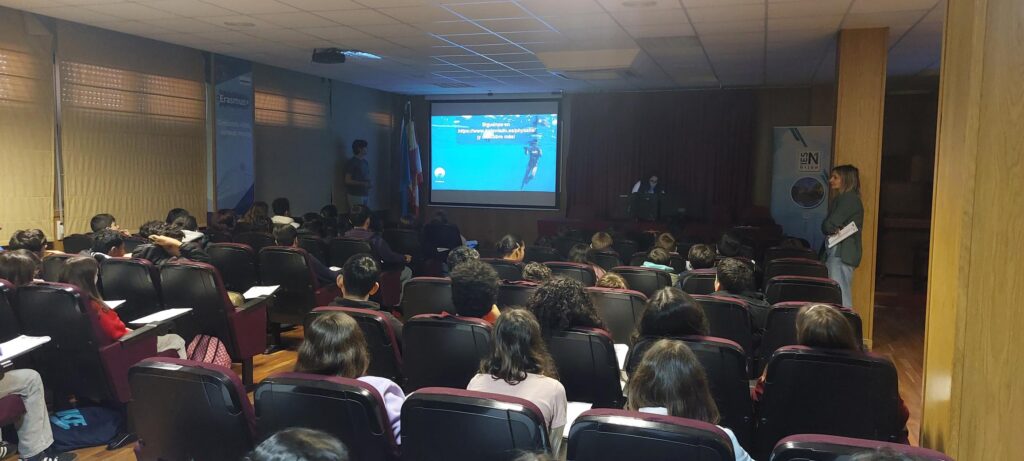
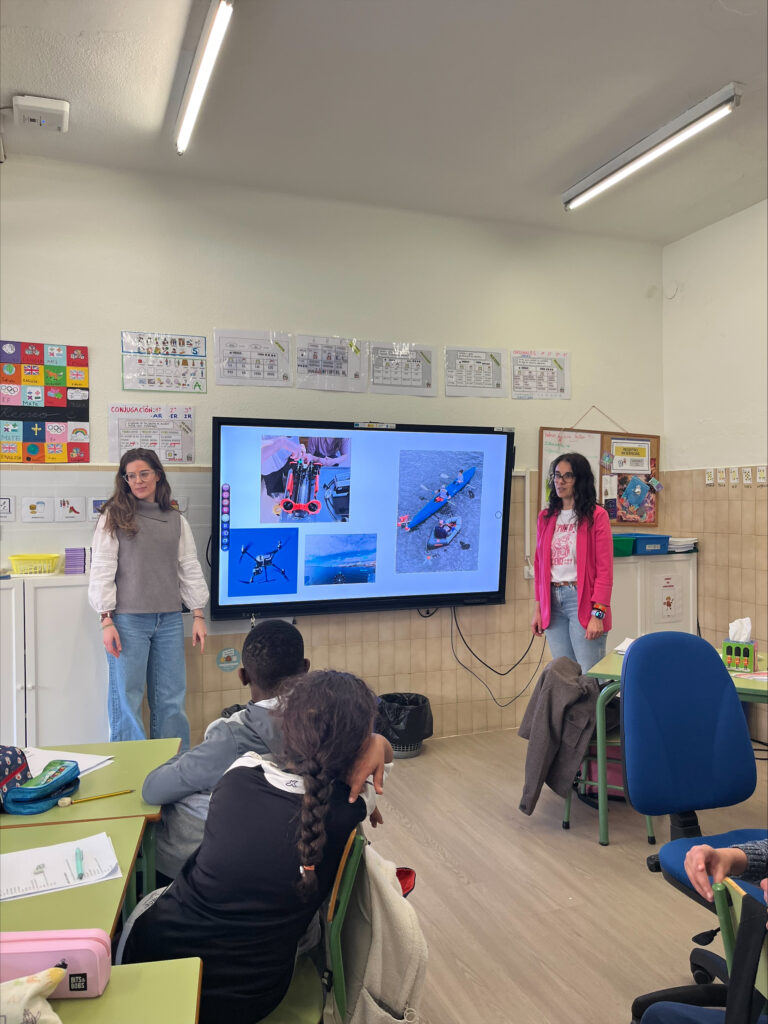
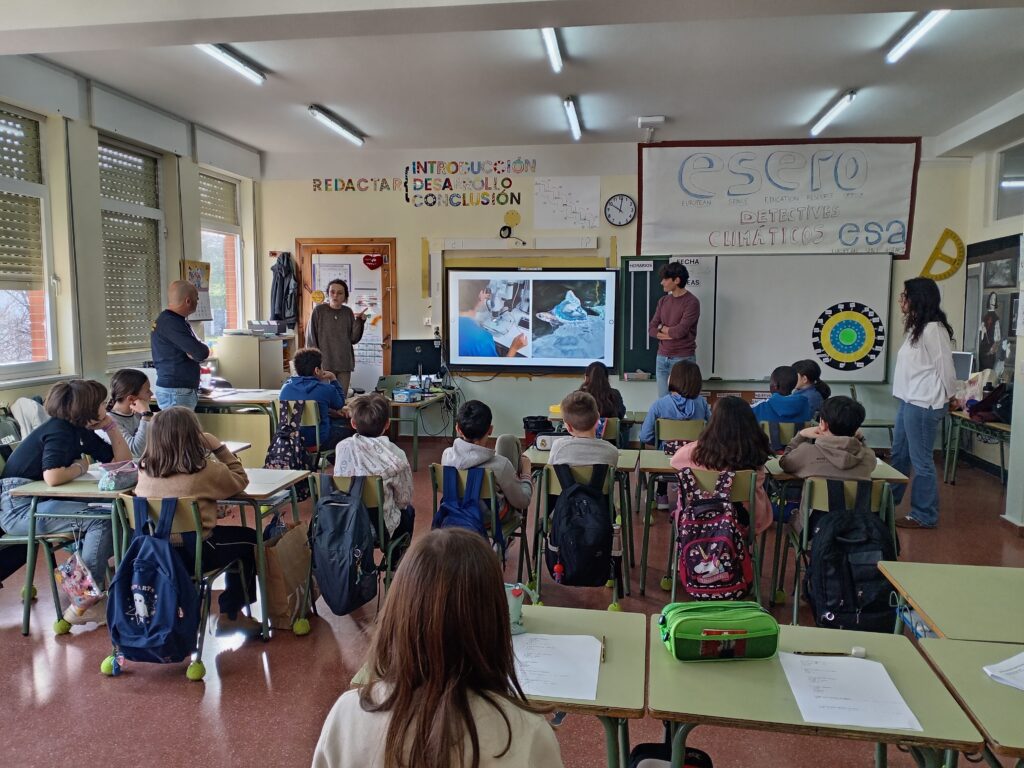
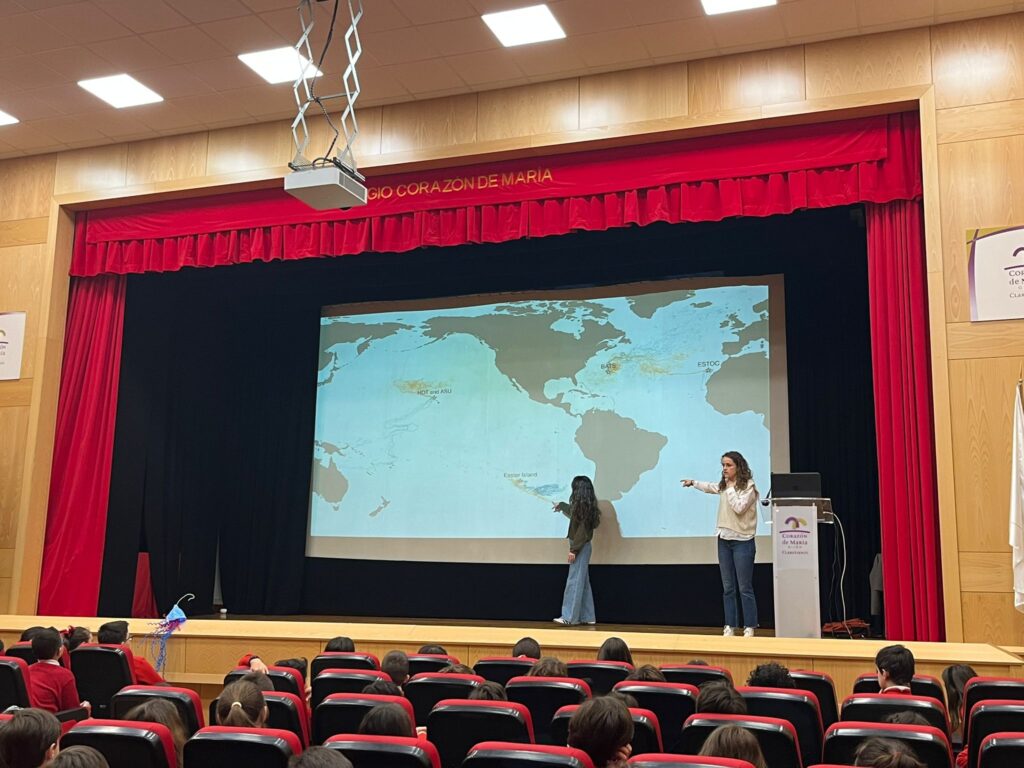
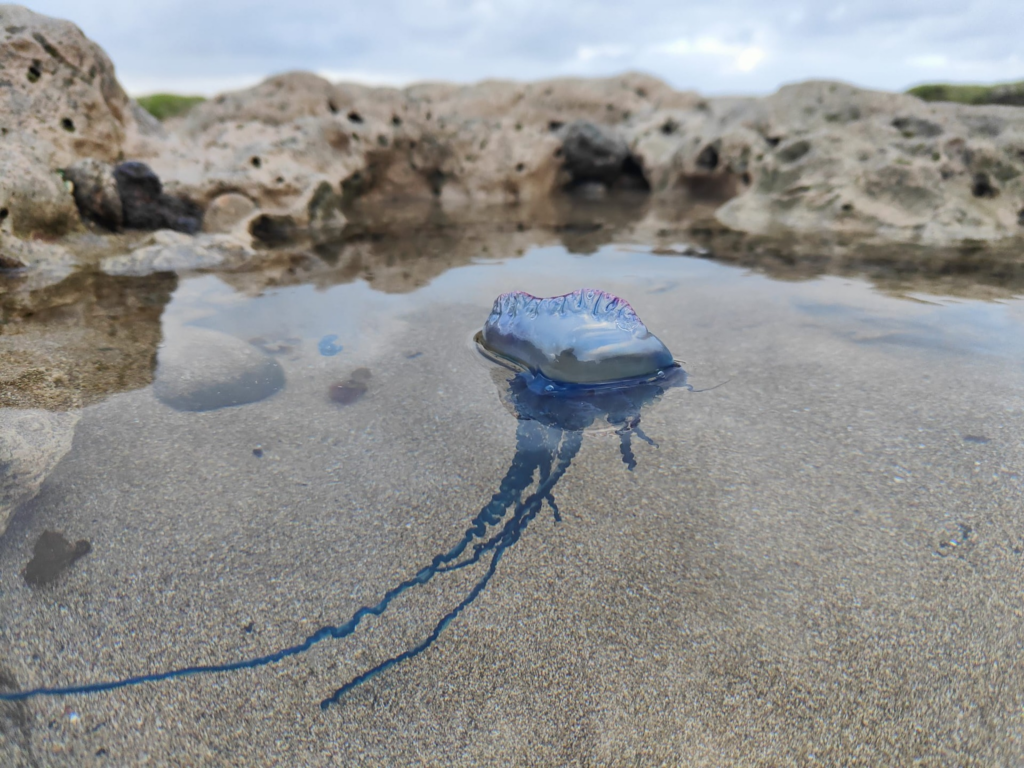
Throughout this first quarter of 2026, the #PhysaliaProject has moved from the laboratories into the classrooms. Through the educational talk titled “Physalias in the Classroom”—part of the De Gira con la Ciencia initiative by the University of Oviedo—we have shared our research on the Portuguese Man-o’-War (Physalia physalis) with the next generation.
Inspiring Scientific Vocations
Our colleagues Verónica, Deva, Gemma and Yago have been leading these sessions, explaining how we study this fascinating organism and promoting ocean conservation. Thanks to this joint effort, we will reach approximately 200 students across various educational levels:
4th Grade Primary students.
1st and 2nd Year Secondary students (ESO).
Higher Vocational Training (FP Superior) students.
Participating Schools
We would like to express our deepest gratitude for the interest and warm welcome from the following centers that made these encounters possible:
CEIP Poeta Antón de Mari Reguera (Candás)
IES Nº1 (Gijón)
CODEMA (Gijón)
CP Rey Pelayo (Gijón)
We will soon share more project details and upcoming outreach activities. A huge thank you to all the teachers for their invaluable collaboration! 🌊🔬
The PHYSALIA Project continues its mission to understand the complex navigation patterns of the Portuguese Man O’ War. In this new 2026 campaign, our research team is deploying cutting-edge technology in Canarian waters to monitor this species—whose extreme fragility prevents the use of direct on-body sensors.
Key Actions of the 2026 Campaign
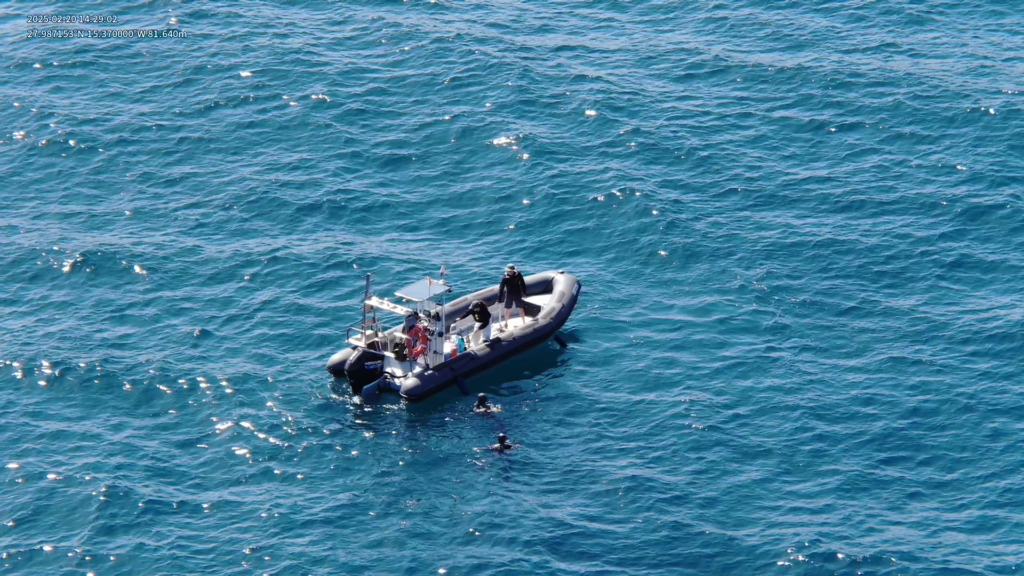
Drone Monitoring: We are performing high-resolution tracking to determine navigation trajectories, recording position, sail orientation, and colony behavior.
Oceanographic Sensors: We utilize specialized buoys equipped with wind and current sensors to analyze the physical mechanics driving their movement across the ocean.
Statistical Rigor: Moving beyond historical studies (some dating back 70 years which only analyzed two specimens), our team monitors 11 specimens per outing, ensuring the statistical replicability of our observations.
Predictive Modeling: The data collected will feed Agent-Based Models (ABM) in a “virtual ocean,” combining biological variables with wind and current data to simulate population dynamics.
“The tracking we are performing in this campaign is vital for understanding how they move and at what speeds. This will allow us to develop prediction models to foresee when and exactly where they will reach our coastlines.” — May Gómez, Lead Researcher.
Interdisciplinary Science for Coastal Safety
This joint effort by oceanographers, evolutionary ecologists, engineers, and modelers aims to shed light on a little-known species while providing scientific tools to improve beach safety and the management of our marine biodiversity.
Project Details The “Evolution of Biological Sailing Navigation” project (PHYSALIA) is funded by the State Research Agency (Ministry of Science, Innovation, and Universities) and will run until August 2027. It features a collaborative team from the University of Oviedo, the Gijón Oceanographic Center, and the Institute of Marine Sciences of Andalusia (ICMAN-CSIC), with support from the REDPROMAR sighting network.
The ECOAQUA University Institute, through the Ecophysiology of Marine Organisms group (EOMAR), and the University Institute of Intelligent Systems and Numerical Applications (SIANI) at the University of Las Palmas de Gran Canaria (ULPGC), under the coordination of EOMAR researcher May Gómez, have launched a new observation and monitoring campaign this week focused on the Portuguese man-of-war (Physalia physalis) in the waters of Gran Canaria. The aim is to improve predictions of its arrival on the coast, taking advantage of the first specimens already reaching the Canary shoreline.
The arrival of the first Portuguese man‑of‑war (Physalia physalis) to the Canary Islands marks the launch of the 2026 campaign of the PHYSALIA project, a collaboration involving ULPGC, the University of Oviedo, ICMAN‑CSIC and the Spanish Institute of Oceanography (IEO).
The research team has started monitoring activities in several locations across Gran Canaria, conducting direct observations, drone flights and oceanographic data collection. This information will help refine predictive models for the species’ arrival to the coast, a recurrent phenomenon in the archipelago with scientific and social relevance.
Investigarán cómo navegan y cómo se distribuyen para predecir su llegada a las playas
El primer ejemplar de carabela portuguesa que llegó al Acuario fue recogido esta semana en la playa de Xagó señala Reyes Descalzo, conservadora del Bioparc Acuario de Gijón.
Hasta ahora los adultos no sobrevivían más que unos pocos días fuera del mar abierto, por lo que hacía muy difícil su estudio asegura Fernando González Taboada, científico titular en el Centro Oceanográfico de Gijón (IEO-CSIC).
Al descubrimiento de su biología se une el interés por saber cómo se mueven y llegan a nuestras costas desde zonas tropicales. Drones, vehículos submarinos y embarcaciones permitirá al Oceanográfico y a la Universidad de Oviedo hacer el seguimiento en el agua apunta Carlos Cuadrado, técnico de la Universidad de Oviedo. Piden además la colaboración ciudadana.
Un proyecto financiado por la Agencia Estatal de investigación al que se han sumado también la Universidad de Las Palmas de Gran Canaria y el Instituto de Ciencias Marinas de Andalucía.
El impacto de nuestro trabajo ha despertado el interés de los medios, y recientemente, RTVC ha dedicado un reportaje al proyecto PHYSALIA. En este video, podrás conocer más sobre el desarrollo de la campaña en Gran Canaria, la importancia de nuestra investigación y los avances que hemos logrado hasta ahora.
Agradecemos a RTVC por ayudarnos a divulgar nuestro trabajo y hacer llegar nuestra ciencia a un público más amplio. ¡No te lo pierdas!
El proyecto ‘Evolución de la Navegación Biológica a Vela’, cuyo acrónimo es PHYSALIA, con el uso de estas boyas y de drones, persigue analizar los patrones de navegación de las carabelas portuguesas, con el objeto de entender su evolución y mejorar las predicciones de su llegada a la costa.
El instituto Ecoaqua participa en un proyecto nacional novedoso e inicia en Gran Canaria la campaña de observación por mar y aire de una especie que obliga a cerrar playas por sus picaduras
Las Palmas de Gran Canaria
Lunes, 24 de febrero 2025, 01:00
El Instituto Universitario de Investigación en Acuicultura Sostenible y Ecosistemas Marinos (Ecoaqua) de la Universidad de Las Palmas de Gran Canaria (ULPGC) ha iniciado la primera campaña de observación de la fragata o carabela portuguesa (‘Physalia physalis’) en aguas de Gran Canaria en el marco del proyecto ‘Evolución de la Navegación Biológica a Vela’ (Physalia). Se hará por tierra y mar, usando drones y boyas de deriva.
El grupo de Ecofisiología de los Organismos Marinos (Eomar) del instituto universitario participa en este proyecto que persigue analizar los patrones de navegación de las carabelas portuguesas, con el objeto de entender su evolución y mejorar las predicciones de su llegada a la costa, informa en un comunicado Ecoaqua.
Además de los patrones de navegación, el proyecto pretende arrojar luz sobre la biología, la distribución espacial y los mecanismos que determinan la estacionalidad de este organismo, pariente de las medusas, del que se conoce muy poco y que, sin embargo, llega frecuentemente a las costas canarias, generando numerosos inconvenientes a los bañistas y que obliga incluso a cerrar playas.
Su picadura es más grave que las de las medusas o aguavivas. Se libera una toxina que provoca una fuerte irritación y dolor pero puede ir más allá y derivar en problemas respiratorios o incluso paralizar algún órgano.
Un equipo interdisciplinar de oceanógrafos, ecólogos evolutivos, ingenieros y modeladores están realizando observaciones in situ de las carabelas portuguesas en el mar y modelarán esas observaciones, explica Ecoaqua.
En el proyecto Physalia también participan el Observatorio Marino de Asturias del Departamento de Biología de Organismos y Sistemas de la Universidad de Oviedo (Uniovi) y el Instituto de Ciencias Marinas de Andalucía, a través del Centro Superior de Investigaciones Científicas (Icman).
Modelos en un océano virtual
«Los modelos de navegación resultantes serán combinados posteriormente con otras variables como el viento, las corrientes marinas y el tamaño de las carabelas para construir modelos basados en agentes (MBA) que simulen la dinámica poblacional de esta especie en un océano virtual», añade el comunicado.
Esta primera campaña de observación se prolongará hasta el 17 de marzo en distintas localizaciones de Gran Canaria como Las Canteras o Taliarte.
Desde esta semana se están realizando ya vuelos con drones de seguimiento de las carabelas para determinar sus trayectorias de navegación. El procedimiento se lleva a cabo con un dron en posición cenital sobre una carabela a la mínima altura posible sin que perturbe las condiciones de viento
FPI fellowships consist in a four-year contract to pursue a PhD under the umbrella of a larger research project funded by the Spanish State Research Agency. Funding covers stays in research centers and PhD expenses and, optionally, up to a one year postdoctoral contract if the PhD is completed before the four year term. The contract includes full health insurance coverage and benefits, and 30 days of vacation per year.
Duties – The fellow will join a multidisciplinary research team of scientists from various institutions [UO and IEO-CSIC in Asturias, ICMAN-CSIC in Cádiz, and ULPGC in Las Palmas de Gran Canaria] to study the distribution of neuston in the ocean surface and the factors that cause their stranding. Among other objectives, the fellow will receive training to lead field experiments to characterize and analyze neuston navigation in situ; to assemble and analyze large databases to study the factors behind neuston distribution at biogeographical scales; and to develop mathematical models to help interpret and understand observed patterns. The fellow will develop a research line related to the project, although they will be encouraged to work independently and to pursue and develop their own ideas.
The thesis will be developed within the PhD Program on Biogeosciences of the University of Oviedo, which is a program associated with the Energy, Environment and Climate Change Cluster of the project “Ad Futurum”, awarded as a Campus of International Excellence. It receives funding from more than 50 companies and spin-offs and endorsed by more than 80 renowned research teams.
Education and skills – degree or master’s in science; previous experience in topics related to oceanography or the marine environment will be positively valued, as well as programming experience and fluency in English. Both the academic record and prior scientific training received will be considered.
Additional knowledge and professional experience – being in possession of a driving license and/or being a boat captain or having a diving certification will be positively valued.
Starting date – early 2025.
Contact – if you are interested, please send an email to fgtaboada[at]gmail.com with a short cover letter, your CV and your academic transcript.