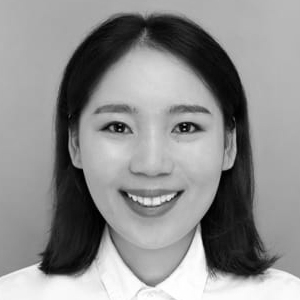
We are pleased to announce that Zhang Yinchenxi has joined us! She was previously working with Prof. Duan at Sichuan University and now will be a PhD student at GELP’s lab under a Chinese grant.
We are pleased to announce that Zhang Yinchenxi has joined us! She was previously working with Prof. Duan at Sichuan University and now will be a PhD student at GELP’s lab under a Chinese grant.
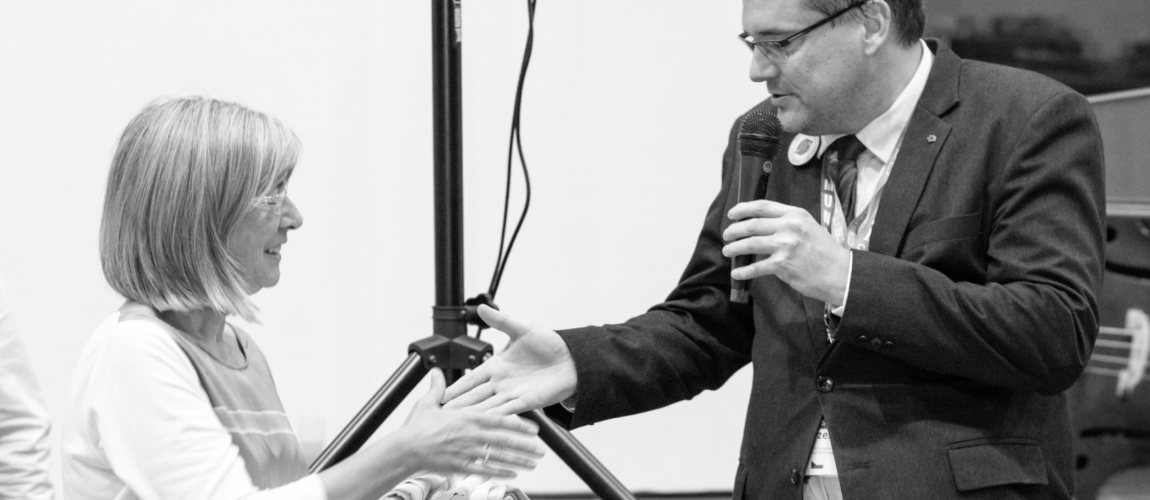
Prof. Nerea Bordel successfully defended Spain’s application to host the 11th Euro-Mediterranean Symposium on Laser-Induced Breakdown Spectroscopy (EMSLIBS) alongside Prof. José Miguel Vadillo (UMA). As a result, the 11th EMSLIBS will be held in parallel with the Colloquium Spectroscopicum Internationale XLII (CSI) in Gijón (Spain) in 2021, with GELP as one of the organizers. IMPORTANT UPDATE: Due to the coronavirus pandemic, the original date of the Symposium had to be delayed and, unfortunately, it won’t be held together with the CSI XLII. 11th EMSLIBS will take place from November 29 to December 2. We invite you to keep up with…
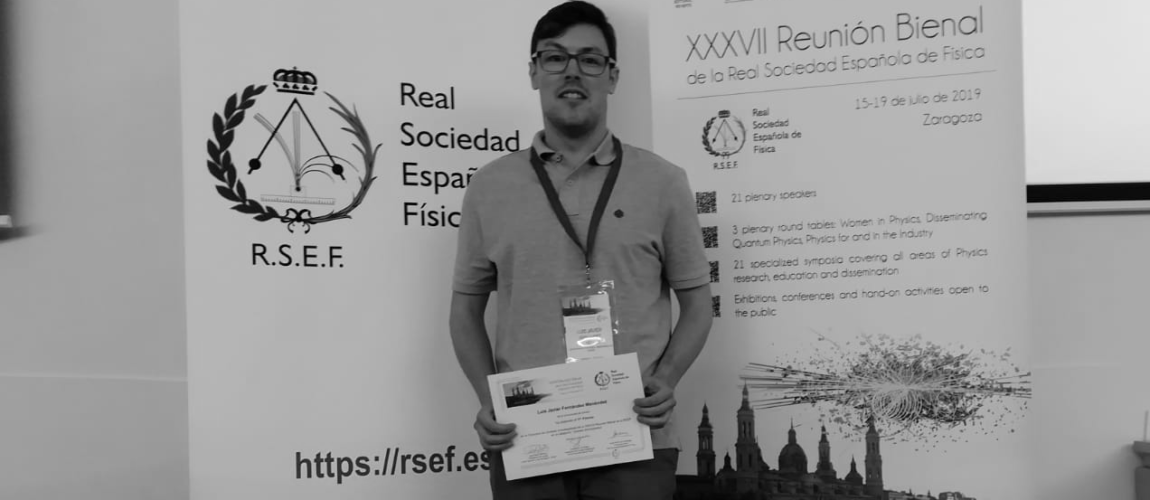
Luis Fernández from the Laser and Plasma Spectroscopy Group has been awarded by the XXXVII Biannual Meeting of the Spanish Royal Society of Physics. This award is given to the best original research work developed during the PhD studies. Luis will present this work in an oral lecture at the XXXVII Biannual Meeting of Spanish Royal Society of Physics, which will be held in Zaragoza (Spain) from 15th to 19th (July 2019) Congratulations Luis!
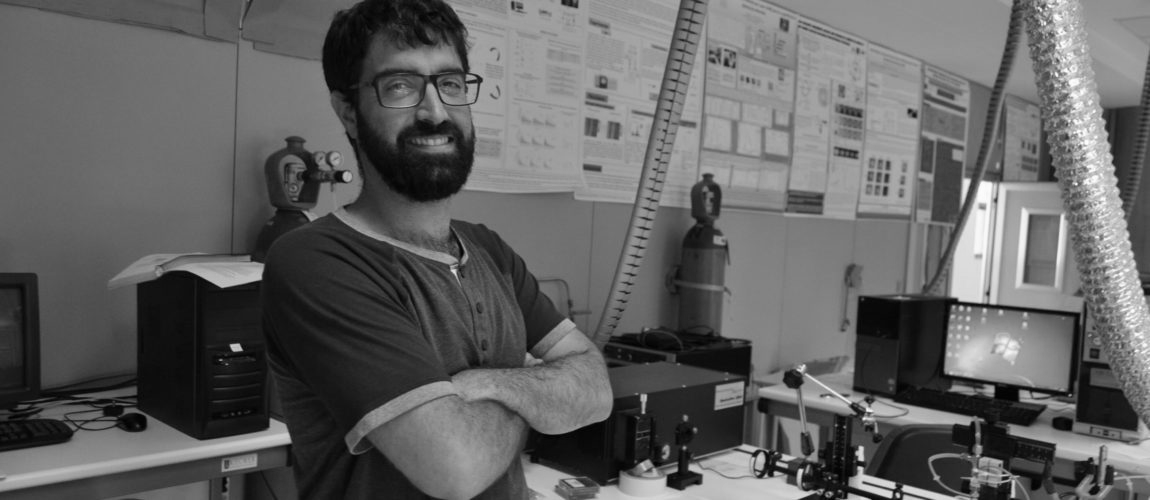
Dr. Jaime Orejas is back as a researcher at the Laser and Plasma Spectroscopy Group after several postdoc stays in USA and France. Welcome back!
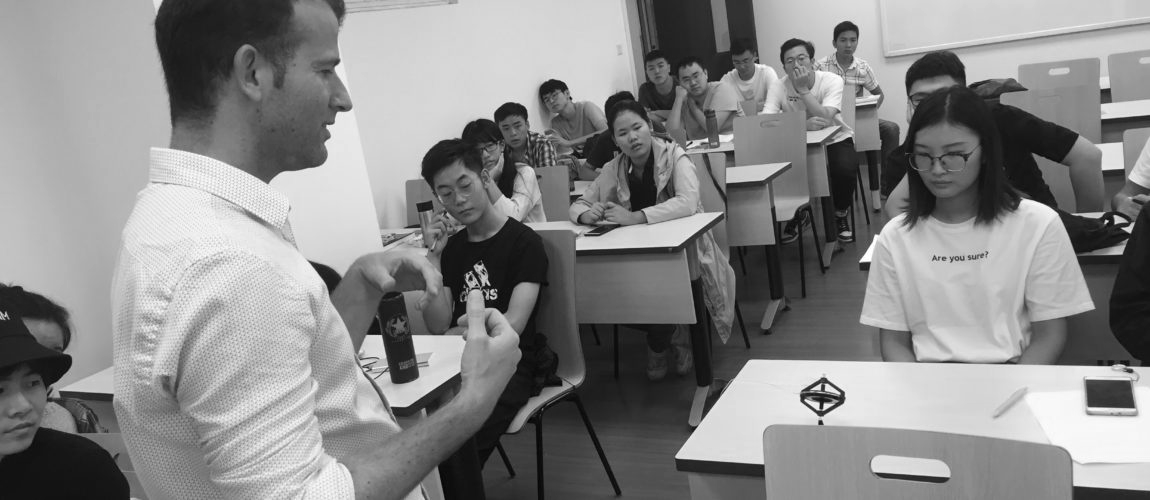
Jorge Pisonero is doing a short stay (May 2019) as Visiting Professor at Sichuan University in Chengdu (China). He is hosted by the Research Group of Prof. Yixiang Duan, member of the 1,000 Talents Plan of the Chinese Government. Moreover, he is a Lecturer at the School of Manufacturing Engineers (teaching undergraduate students).
Prof. Nerea Bordel Principal Investigator. Full Professor at University of Oviedo.More Info Contact Prof. Jorge Pisonero Co-Principal Investigator. Full Professor at University of Oviedo.More info Contact Dr. Cristina González Associate Professor at University of Oviedo.ResearchGate profile Contact Dr. Jaime Orejas Assistant Professor at University of OviedoMore info ResearchGate profile Dr. Luis Javier Fernández-Menéndez Interim Assistant Professor at University of Oviedo. ResearchGate profile Contact Dr. Cristina Méndez-López Interim Assistant Professor at University of Oviedo. ResearchGate profile Contact
Sample Text

Atmospheric Pressure Glow Discharge Spectroscopy GELP’s experience in Glow Discharges opened the door to the design, characterization and study of the analytical potential of Atmospheric-Pressure Glow Discharges (APGD). In the last years, this kind of glow discharges have revolutionized the ionization sources available in the market. APGD’s are non-expensive, fast and easy-to-use sources due to the low need for sample preparation and the lack of vacuum systems to sustain the discharge. Latest works at GELP in this area have been focused on the study of the species generated through several sources designed in the group, having demonstrated the usefulness of…
Laser Ablation Inductively Coupled Plasma Mass Spectrometry Laser ablation inductively coupled plasma mass spectrometry (LA-ICP-MS) has evolved into a well-established technique for both fast qualitative and quantitative elemental mapping, characterized by high lateral resolution (micrometers) and high sensitivity. A pulsed laser (e.g., ns or fs) is employed at a certain repetition rate (typically > 10 Hz), with the sample-mounted stage moving beneath the laser beam, operating in a laser raster mode. The laser-induced aerosol is transported from a sealed ablation chamber to the ICP-MS using a continuous flow of inert gas, such as helium. Wash-out times for conventional low-dispersion laser-ablation…
Previous ns-LIBS experimental set-upCurrent ns-LIBS experimental set-upSpatially resolved light collectionArchaeological analysisNebulization systemCurrent fs/ns-LIBS set-upDetail of the orthogonal double pulse configuration Simplified schematics of the fs/ns-LIBS set-up Laser-Induced Breakdown Spectroscopy One of the plasma generation procedures handled by the research group is the use of high-intensity pulsed lasers. The LIBS technique, acronym for Laser-Induced Breakdown Spectroscopy, is based on the analysis of laser-generated plasmas and its origin dates back to the decade of the 1960s, in parallel with the appearance of the first lasers. LIBS is used for the detection and quantification of chemical elements in all types of samples, regardless…